
Was Sri Lanka once the mighty kingdom of Ravana, the legendary ruler of Lanka described in the ancient Indian epic, the Ramayana? This question has fascinated historians, pilgrims, and travelers. For centuries, turning the island into a land of mystery, devotion, and timeless stories. From mist covered mountains and hidden caves to sacred temples nestled in lush landscapes. Sri Lanka is believed to hold the physical footprints of one of the world’s greatest epics. According to the Ramayana, this island was not just a setting, but the very heart of a powerful kingdom ruled by Ravana. A scholar, a devotee of Lord Shiva, and one of the most complex characters in epic literature. Was Sri Lanka Truly Ravana’s Realm? You can find truth through journey into Ramayana Legends with Ventora tours.
Even today, these legends are not confined to ancient texts. They live on through oral traditions, spiritual practices, and real locations that travelers can still visit. As you journey across Sri Lanka, every mountain path and forest clearing seems to whisper stories of Sita’s captivity, Hanuman’s heroic leap, and Rama’s divine quest.
This article invites you to step beyond mythology and into a world where legend and landscape merge. Exploring whether Sri Lanka was truly Ravana’s realm, or a timeless stage where one of humanity’s greatest stories continues to unfold.
The Ramayana – A Timeless Epic
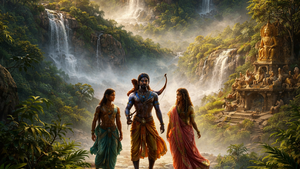
The Ramayana* is one of the oldest and most influential epics in human history. Believed to have been composed thousands of years ago by the sage Valmiki*. More than just a story, it is a spiritual and cultural foundation for millions across South Asia and beyond, shaping values, beliefs, art, and traditions for generations.
At its heart, the Ramayana tells the divine journey of Prince Rama, an incarnation of Lord Vishnu, whose life is guided by duty, righteousness, and devotion. Alongside him are Sita, the symbol of purity and strength, Lakshmana*, his loyal brother and Hanuman, the fearless devotee whose faith and courage know no limits.
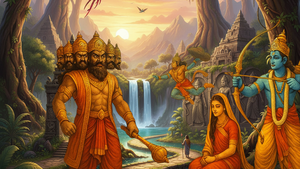
The central conflict unfolds when Sita is abducted by Ravana, the powerful king of Sri Lanka, and taken to his island kingdom. What follows is an epic quest that spans forests, oceans, and realms. A battle between good and evil, faith and ego, destiny and free will.
Yet the Ramayana is not merely a tale of war and heroism. It is a story about love, loyalty, sacrifice, and moral choice. Its themes remain deeply relevant even today, which is why the epic continues to inspire temples, festivals, performances, and pilgrimages across Asia. And why Sri Lanka holds such a sacred place within its legendary geography.
Who Was Ravana*? Villain or Visionary King?
In most versions of the Ramayana, Ravana is portrayed as the great antagonist. The ten-headed demon king who abducted Sita and challenged the divine authority of Lord Rama. Yet, when we look deeper into ancient texts and regional interpretations, Ravana emerges as one of the most complex and fascinating characters in epic history.
Ravana was not merely a symbol of evil. He was a brilliant scholar, a master of the Vedas*, an accomplished musician, and a devoted follower of Lord Shiva. Legends describe him as a ruler of immense knowledge, unmatched intelligence, and extraordinary power, who governed a prosperous and advanced kingdom.
In Sri Lankan folklore, Ravana is often remembered not as a villain, but as a legendary king. A visionary leader with deep roots in the island’s ancient civilization. Some traditions even credit him with remarkable achievements in medicine, engineering, and aviation, suggesting that his reign represented a golden era of innovation and cultural richness.
This dual identity of Ravana — both feared and revered — adds depth to the Ramayana narrative. It transforms the story from a simple battle between good and evil into a timeless exploration of pride, power, wisdom, and the fine line between greatness and downfall.
Why Sri Lanka Is Linked to Ravana’s Kingdom
Many scholars and believers associate the “Lanka” mentioned in the epic with present-day Sri Lanka due to its location, climate, and physical features. The island’s dense forests, misty highlands, dramatic caves, and hidden valleys align remarkably well with the environments described in the story.
Beyond written sources, oral traditions passed down through generations further strengthen this belief. Local communities have long shared stories of Ravana’s reign, marking specific mountains, waterfalls, and caves as sites connected to key events of the Ramayana. These narratives have transformed natural landmarks into sacred spaces, blending mythology with lived cultural memory.
While historical evidence remains open to interpretation, the emotional and spiritual connection between Sri Lanka and Ravana’s Lanka is undeniable. For many travelers, it is this powerful fusion of legend and landscape. That makes the island feel less like a setting of fiction and more like a living chapter of an ancient epic.
Key Ramayana Sites in Sri Lanka
One of the most captivating aspects of the Ramayana legend is that people do not confine it to ancient texts. It lives on through real places that travelers can still visit across Sri Lanka. These sacred locations scattered among misty hills, dense forests, and spiritual towns, form the heart of the Ramayana Heritage Trail.
Ashok Vatika (Sita Eliya)
People believe that Ashok Vatika is the garden where Ravana held Sita captive, making it one of the most revered Ramayana sites on the island. Today, this serene spot in Nuwara Eliya is home to the Seetha Amman Temple, where pilgrims come to offer prayers and reflect on Sita’s strength, patience, and devotion.
Ravana Cave
People say that Ravana Cave, located near Ella, served as one of Ravana’s secret hideouts. Surrounded by dramatic rock formations and lush greenery. The cave evokes a sense of mystery and power, allowing visitors to imagine the ancient world where legends were born.
Divurumpola
This sacred site is believed to be where Sita underwent the Agni Pariksha — the trial by fire to prove her purity. Today, Divurumpola stands as a powerful symbol of faith, resilience, and spiritual truth.
Munneswaram Temple
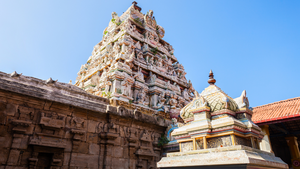
According to legend, Lord Rama prayed at Munneswaram after defeating Ravana, seeking forgiveness for the act of killing a Brahmin king. The temple remains a significant pilgrimage site, representing reconciliation, humility, and divine balance.
Rumassala Hill
People believe that Rumassala is a fragment of the Himalayan mountain that Hanuman carried while searching for medicinal herbs to save Lakshmana. This coastal hill near Galle blends mythology with natural beauty, offering both spiritual meaning and breathtaking views.
Together, these sites form a sacred map across Sri Lanka. A journey that allows travelers not just to witness history. But to walk through the very landscapes where people believe the Ramayana unfolded.
Myth vs History – What Do Scholars Say?
The question of whether the Ramayana is purely a myth or a reflection of historical reality has intrigued scholars, historians, and researchers for centuries. While there is no concrete archaeological evidence to definitively prove that the events of the Ramayana occurred exactly as described. Many experts believe that real locations, ancient kingdoms, and cultural memories may have inspired the epic.
Some historians suggest that the Ramayana represents a blend of historical events and symbolic storytelling, where geography and real landscapes were woven into a spiritual narrative. The descriptions of Lanka as a wealthy island kingdom. For example, align closely with Sri Lanka’s position as an important maritime hub in ancient trade routes.
Rather than focusing on physical proof alone, scholars emphasize the concept of “living history.” The Ramayana survives not through monuments and inscriptions. But people preserve it through traditions, rituals, festivals, and collective belief systems passed down for thousands of years.
In this sense, the Ramayana is both legend and history. Not measured by scientific evidence, but by its enduring cultural impact. It continues to shape identities, inspire pilgrimages, and connect people across borders. Making Sri Lanka an essential chapter in one of humanity’s greatest timeless stories.
Why the Ramayana Trail Is a Spiritual Journey
Visiting the Ramayana sites in Sri Lanka is far more than a sightseeing adventure. It is a journey of the heart, mind, and soul. Each location along the trail carries layers of history, mythology, and devotion. Allowing travelers to experience the epic’s stories in a deeply personal way.
Walking through Ashok Vatika, exploring Ravana Cave, or offering prayers at Seetha Amman Temple connects visitors not only to the landscape but also to centuries of spiritual practice. The air seems to hum with ancient tales of courage, loyalty, love, and sacrifice. Pilgrims and travelers alike report a sense of awe, reflection, and inner calm as they move through these sacred spaces.
Beyond spiritual reflection, the trail offers a unique opportunity to immerse oneself in Sri Lanka’s cultural and natural beauty. From lush highlands and misty valleys to sacred temples adorned with intricate carvings. The journey blends myth, history, and nature seamlessly. It invites travelers to step into the stories themselves – to imagine Hanuman’s leap, Sita’s trials, and Rama’s quest. While also enjoying the serenity and majesty of the island.
For those seeking meaning beyond ordinary travel, the Ramayana Trail is a pilgrimage of discovery, devotion, and wonder. A rare experience where mythology comes alive, and every step feels like walking through a living legend.
Experiencing Ravana’s Realm with Ventora Tours
Exploring the Ramayana Trail with Ventora Tours. Transforms a journey through myth and history into a luxurious, seamless, and unforgettable experience. Every step along the trail is carefully curated to ensure travelers enjoy both the spiritual richness and the comfort they deserve.
With expert guides well-versed in the Ramayana’s legends, you will hear the stories come alive – from the grandeur of Ravana’s kingdom to the trials of Sita, and Hanuman’s legendary feats. We approach each location with respect and cultural sensitivity, allowing visitors to immerse themselves. Fully in the narrative without disrupting the sacred environment.
Ventora Tours also ensures luxurious travel arrangements, whether it’s private transportation between sites, stays in boutique hotels near the highlands, or curated meals that reflect Sri Lanka’s rich culinary traditions. This combination of comfort and storytelling allows travelers to connect deeply with the land and its legends, without the stress of planning logistics or missing hidden gems.
Whether you are a history enthusiast, spiritual seeker, or simply a traveler drawn to extraordinary experiences, Ventora Tours offers a journey that bridges myth and reality. Transforming the Ramayana Trail into a personal adventure of discovery and wonder.
A Legend You Can Walk Through
Whether Sri Lanka was truly Ravana’s kingdom may remain a mystery, but one thing is certain. The island is alive with the stories, landscapes, and spiritual echoes of the Ramayana. Walking through its sacred temples, misty caves, and lush valleys allows travelers to step into a world. Where legend and reality intertwine.
The Ramayana Trail is more than a journey through history or mythology. It is an experience that touches the soul, inviting reflection, wonder, and a deep appreciation for Sri Lanka’s cultural and natural heritage. Every site tells a story, every path carries a memory. And every moment connects visitors to centuries of devotion and imagination.
With Ventora Tours, you don’t just see the sites – you live the legend, exploring Sri Lanka in comfort, with expert guidance, and a sense of reverence that honors the epic itself. Embark on this extraordinary journey and discover the island where myths breathe, history whispers, and every step feels timeless.
- SageValmiki*=
- Sage = a very wise and respected spiritual scholar or holy person.
- Valmiki = the ancient Indian sage who is traditionally believed to have written the Ramayana.
- Lakshmana* = The younger brother of Lord Rama
- Ramayana* = “The life journey of Lord Rama and the values he represents.”
- Ravana* =“The legendary ancient king of Lanka (Sri Lanka) in the Ramayana.”
- A master of the Vedas* =Ravana, a master of the Vedas, was portrayed as a highly learned scholar with deep spiritual and intellectual knowledge.